
- Custom manufacturing
- Production planning
- Logistics & accounting
VS Nexusconnected manufacturing operations
Manufacturing operations for VS Production, Sweden
A made-to-order product needs more than an order number. It has materials, manufacturing steps, a promised delivery date and people responsible for getting it finished. ReApptor built VS Nexus to connect these decisions for VS Production, from order handling and workshop execution to shipping and Fortnox invoicing. The platform is in production and continues to develop alongside the business.
- Live product The product is in real use with live customer orders and day-to-day operations.
- Active development The product is actively extended with paid development, including new larger modules and vertical scaling.
- Svenska (Swedish)
- English (English)
ReApptor can build multilingual workflows for teams and customers working across markets!
Case overview
Business problem
Custom work crosses too many handovers
For a custom manufacturer, the difficult part is keeping different versions of the same job aligned. Sales has the customer’s requirements, production has the work to complete, logistics has packages and carrier details, and administration needs an accurate invoice. When that context sits in email, spreadsheets and separate services, each handover creates more checking. A changed delivery date or overlooked packaging cost affects the next team.
A common record, carried through the work
VS Nexus brings these responsibilities into the same operational flow. Orders keep their customer, manufacturing, delivery and accounting context. Production routes describe the work behind individual order lines, while the queue makes progress and exceptions visible. Sendify and Fortnox remain part of the team’s everyday work, connected through shipment and invoice records. The result is a shared place to act on an order and understand what needs to happen next.
One order, across the business
Follow the work all the way through.
VS Production manufactures products such as lift panels, signs and engraved components. VS Nexus keeps the commercial order and the practical work connected as responsibility moves between teams.
-
Define what needs to be made
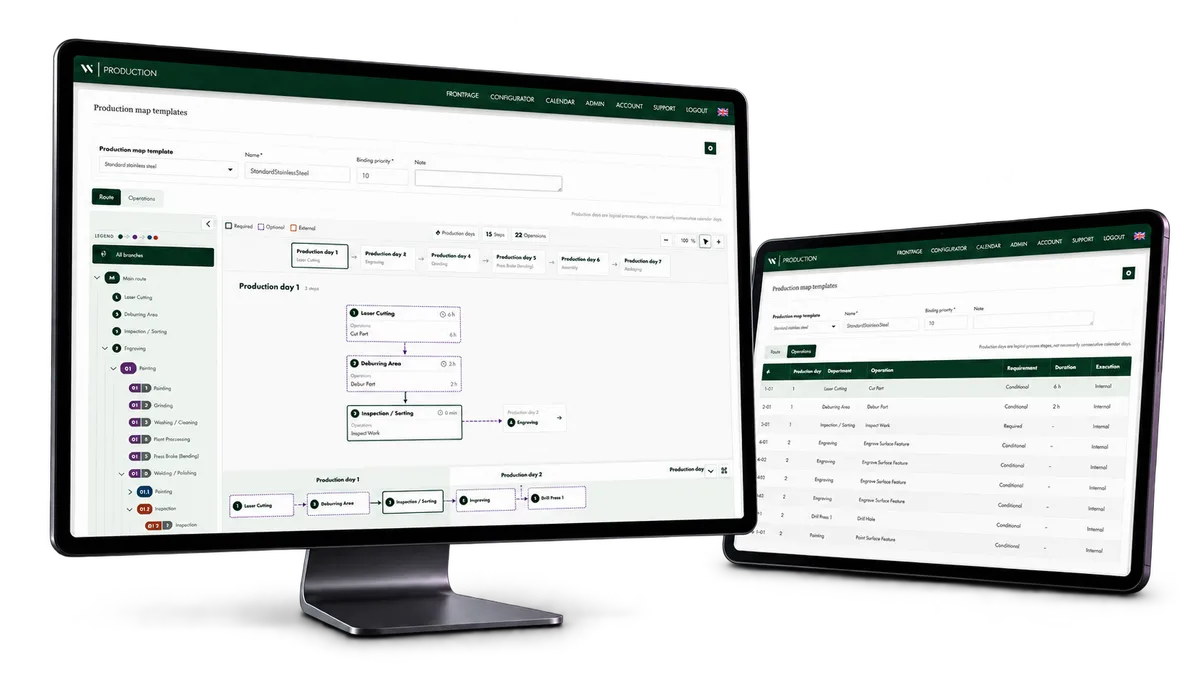
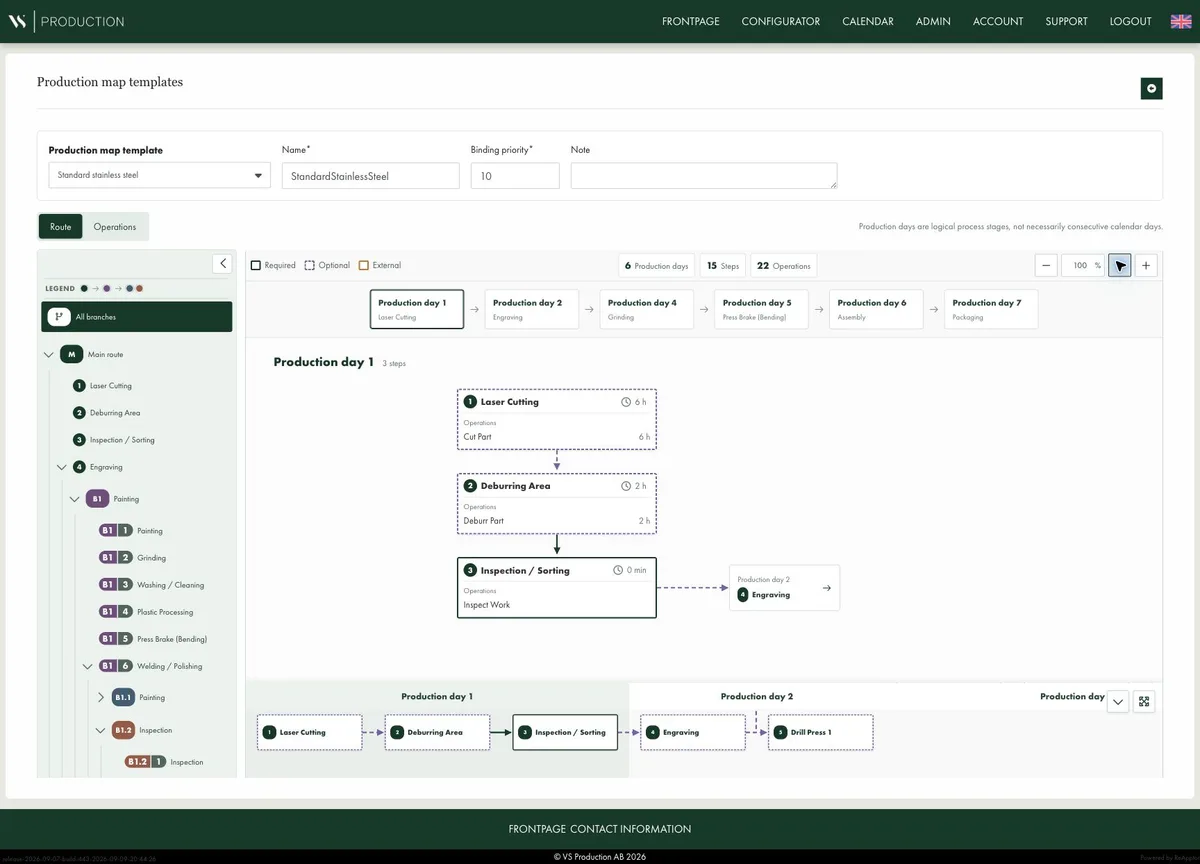
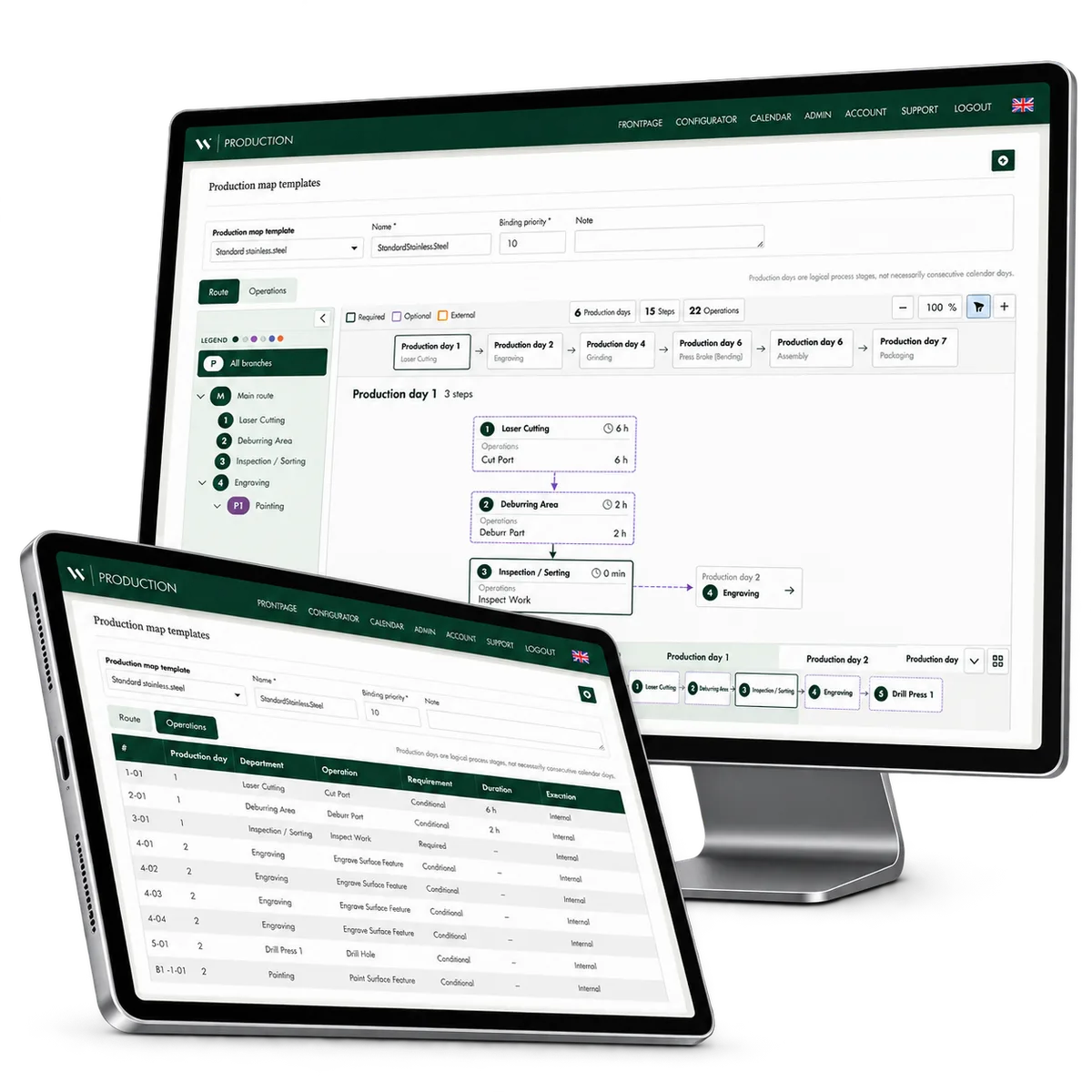
Bring the customer, order lines, documents and delivery requirements together. Production maps translate each line into the relevant departments, operations and planned work.
-
Plan, carry out and follow up
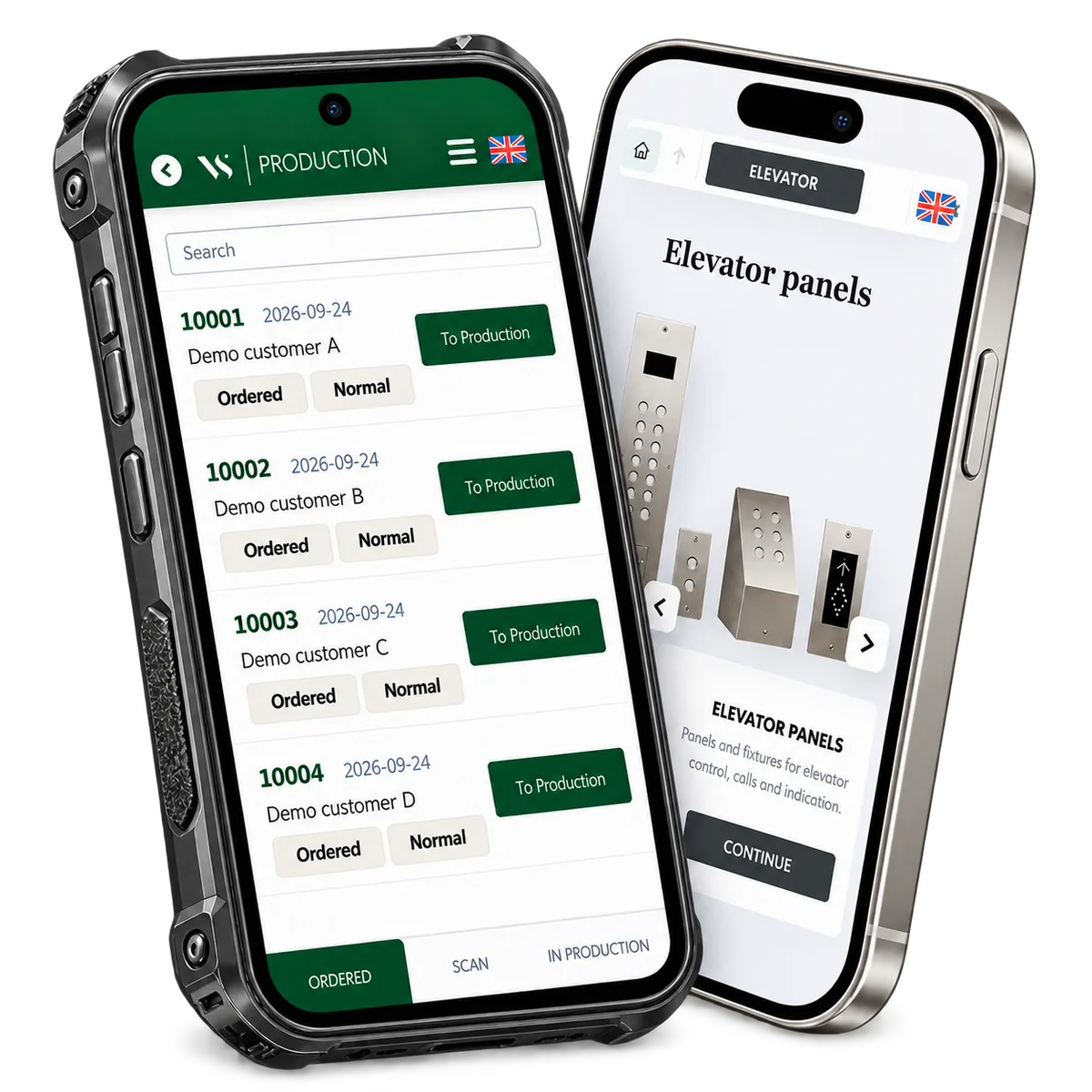
Teams use the production queue and calendar to see the work ahead. Starting and finishing an order updates its status; changed dates and delay reasons stay with the order.
-
Deliver and close the financial loop
Connect packages and delivery charges to shipment booking, tracking and documents. Invoice-ready orders continue into Fortnox, individually or together on a consolidated invoice.
Case overview
Different responsibilities. The same order.
The platform serves people with different responsibilities around the same job. A workshop user needs to see what should be produced next; a manager needs to understand delays, complaints and outstanding invoicing. Customer-facing views bring relevant order and delivery information closer to the customer. ReApptor’s work connects these perspectives through application design, business logic and integrations, with further development continuing on the same foundation.
Existing manufacturing knowledge remains part of the work. Excel orders, scanned production documents and invoice PDFs stay linked to the orders they describe. The office can revisit the customer’s requirements while following the same order through manufacturing, delivery and accounting.
Sales and order handling
Customer context, order details, documents and delivery commitments.
Production and planning
Manufacturing routes, operation schedules and the workshop queue.
Logistics and administration
Packages, freight booking, delivery costs and Fortnox invoices.
People and management
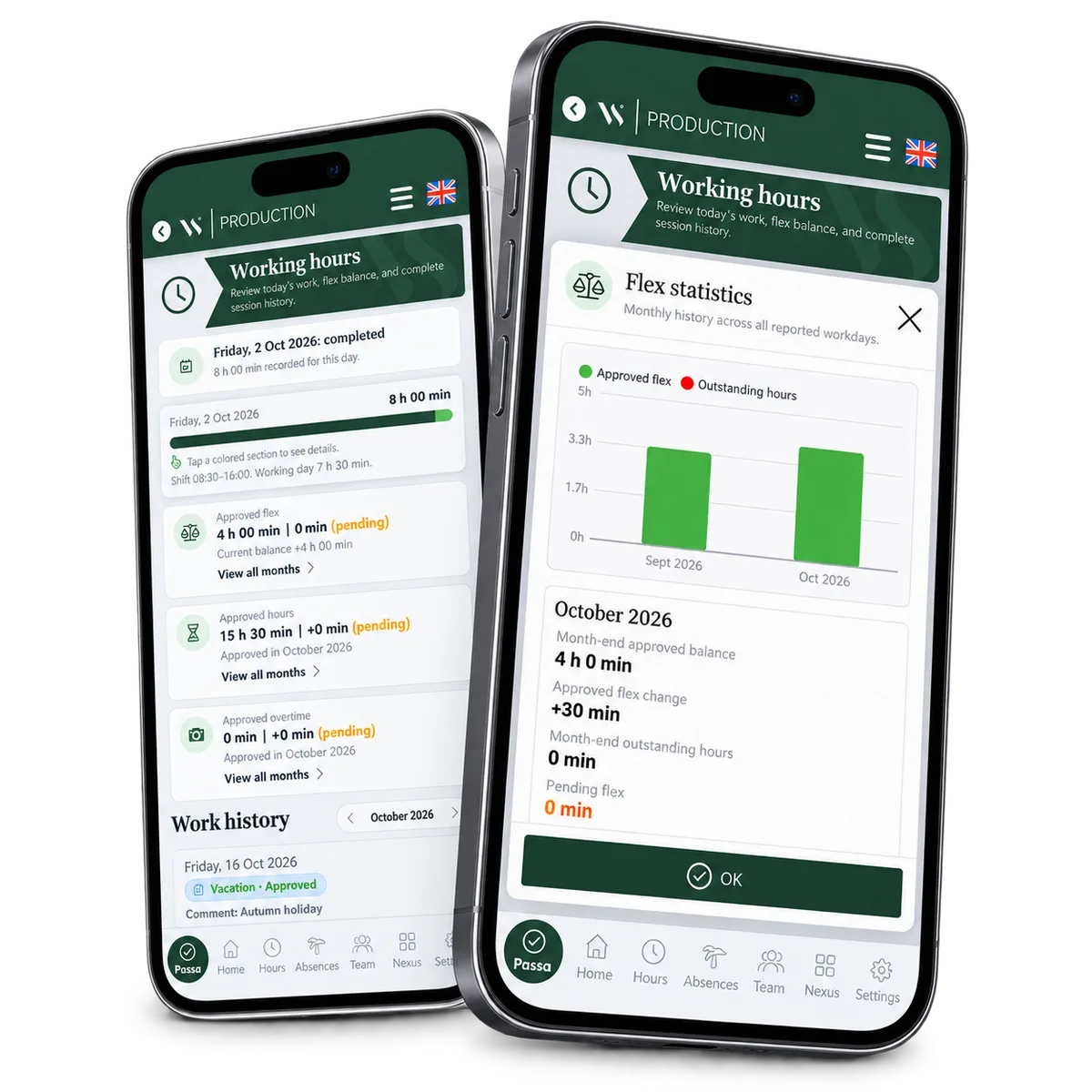
Working hours, absence review, calendar context and operational reporting.
Product capabilities
What customers and teams can do
Catalog and configuration
Product detail that reflects the work
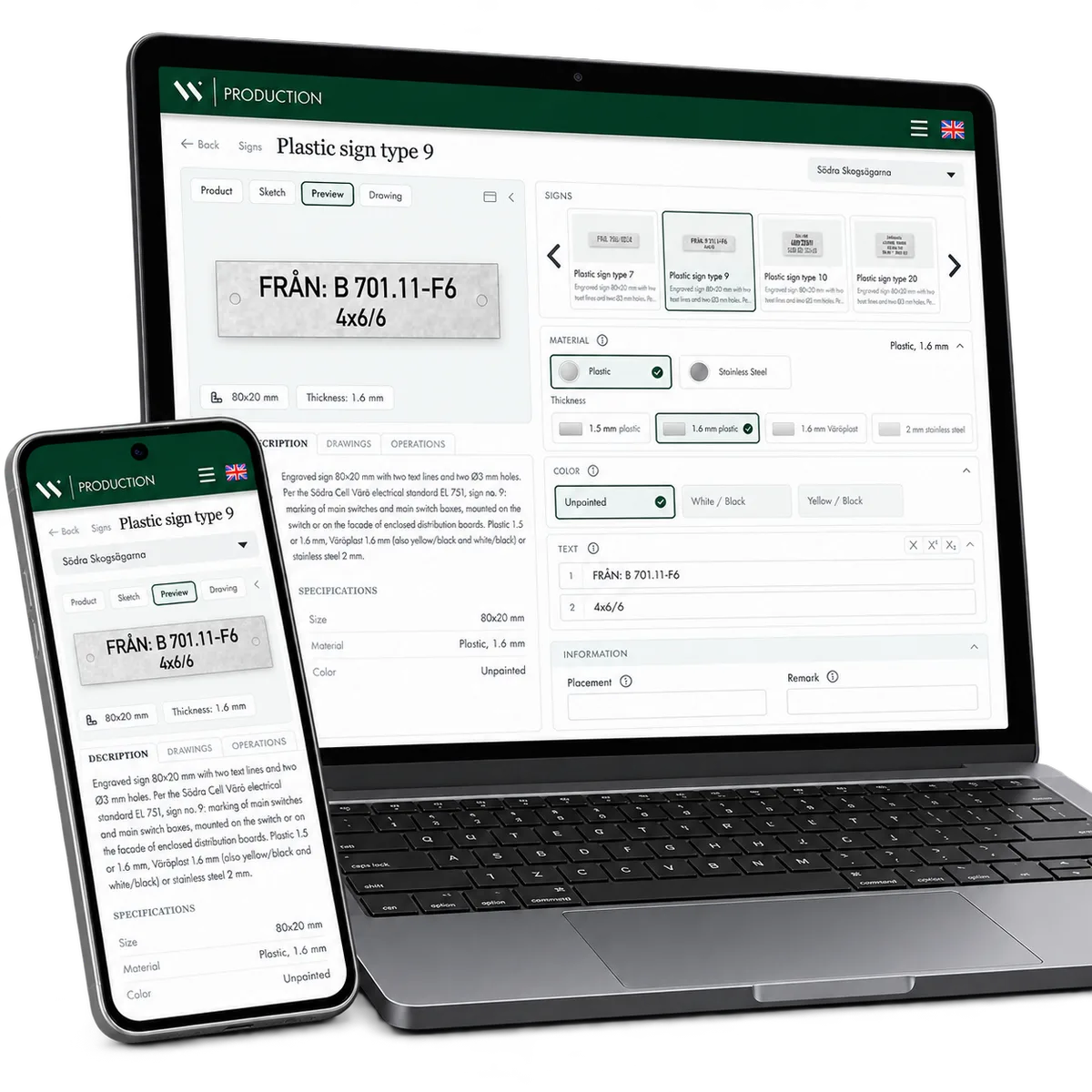
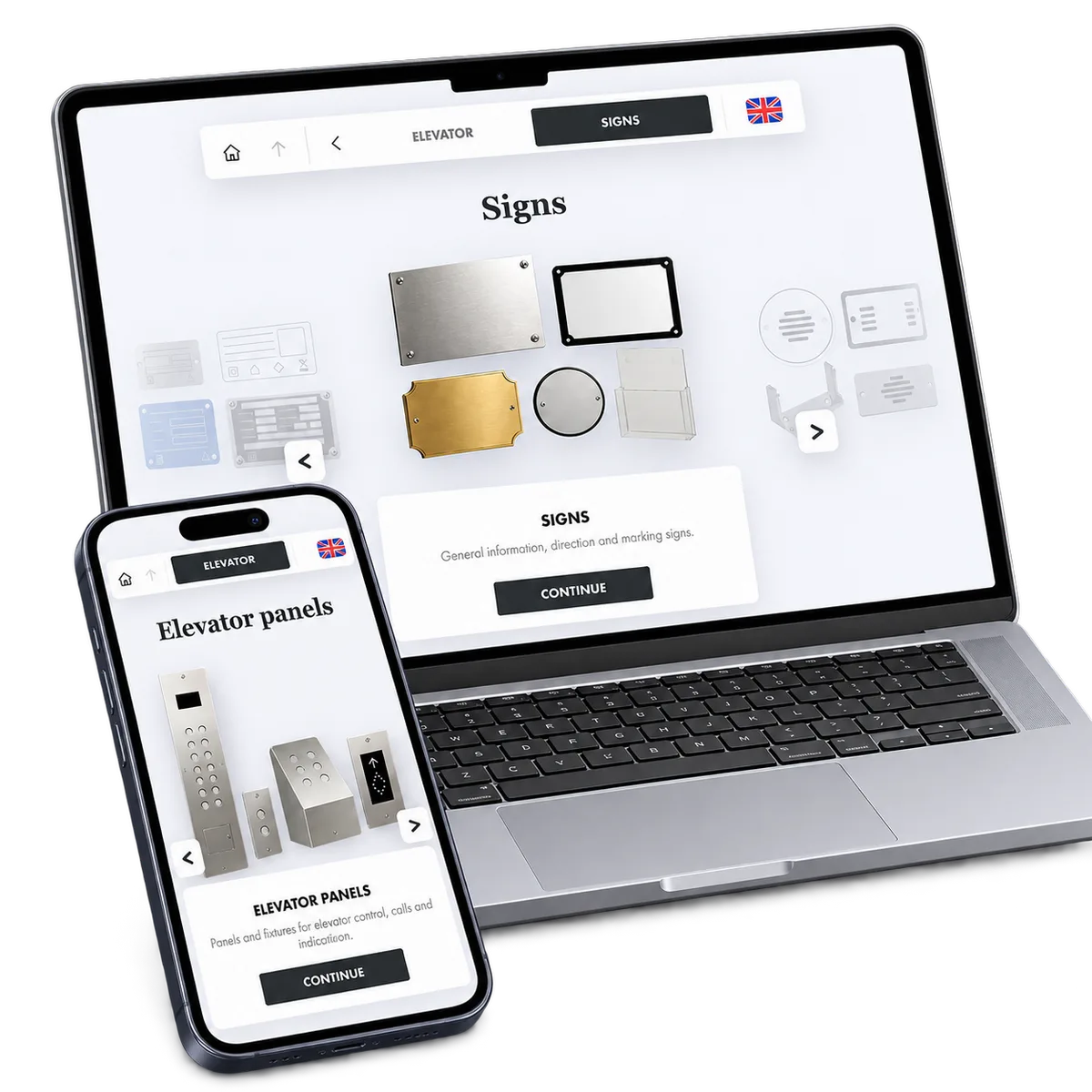
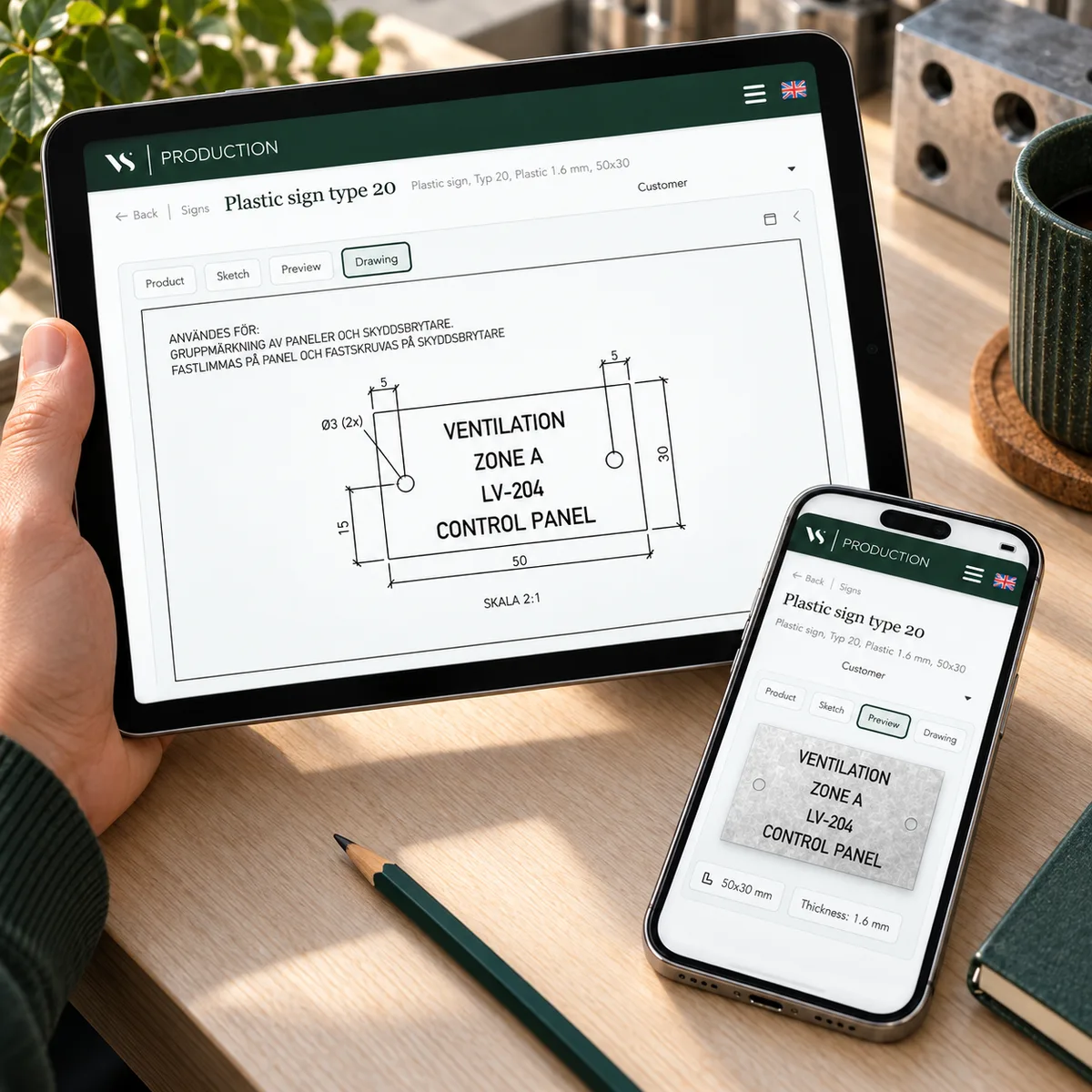
The product catalog organises groups, variants and images, with configurable options such as material, size, text, logo and Braille tied to each product's attributes.
Manufacturing planning
From an order line to a production route
Production templates connect materials and requirements to departments, operations, durations and manufacturing days. Each order line gets its own planned route in the production calendar.
Workshop and management
Progress and exceptions stay visible
The production queue tracks order starts, completions, delivery-date changes and delay reasons. Operational views bring together delivery accuracy, complaints and invoicing for management follow-up.
Packing and logistics
The shipment includes its real costs
Orders can share a customer shipment while keeping their original links. Packaging and freight costs are recorded explicitly, and Sendify handles rates, booking, tracking and labels.
Finance and reconciliation
Invoice preparation follows delivery
VS Nexus links operational orders to Fortnox and checks invoicing readiness. Orders can be invoiced individually or grouped, with ERP references and PDFs attached to the record.
Passa workforce tools
People are part of the operating picture
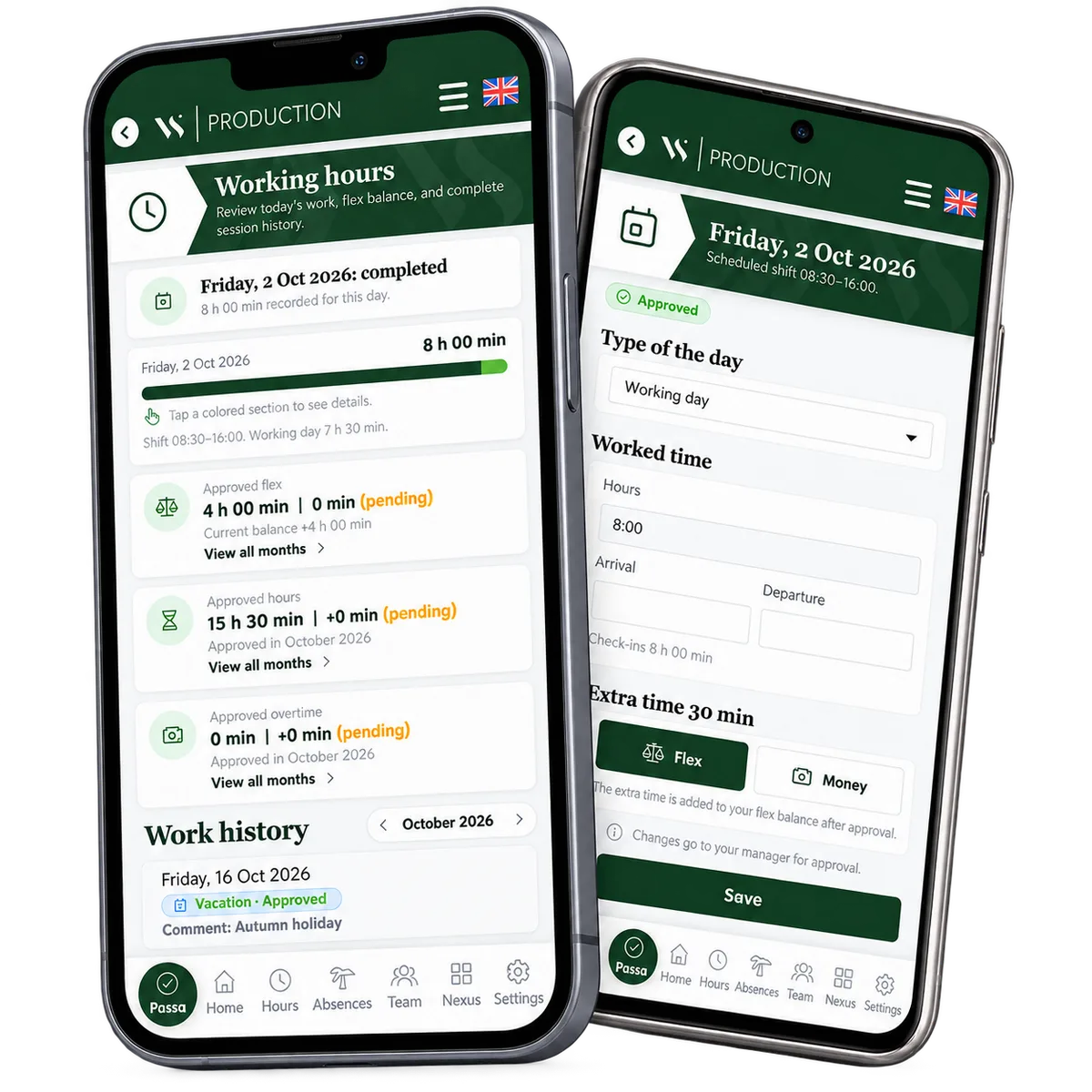
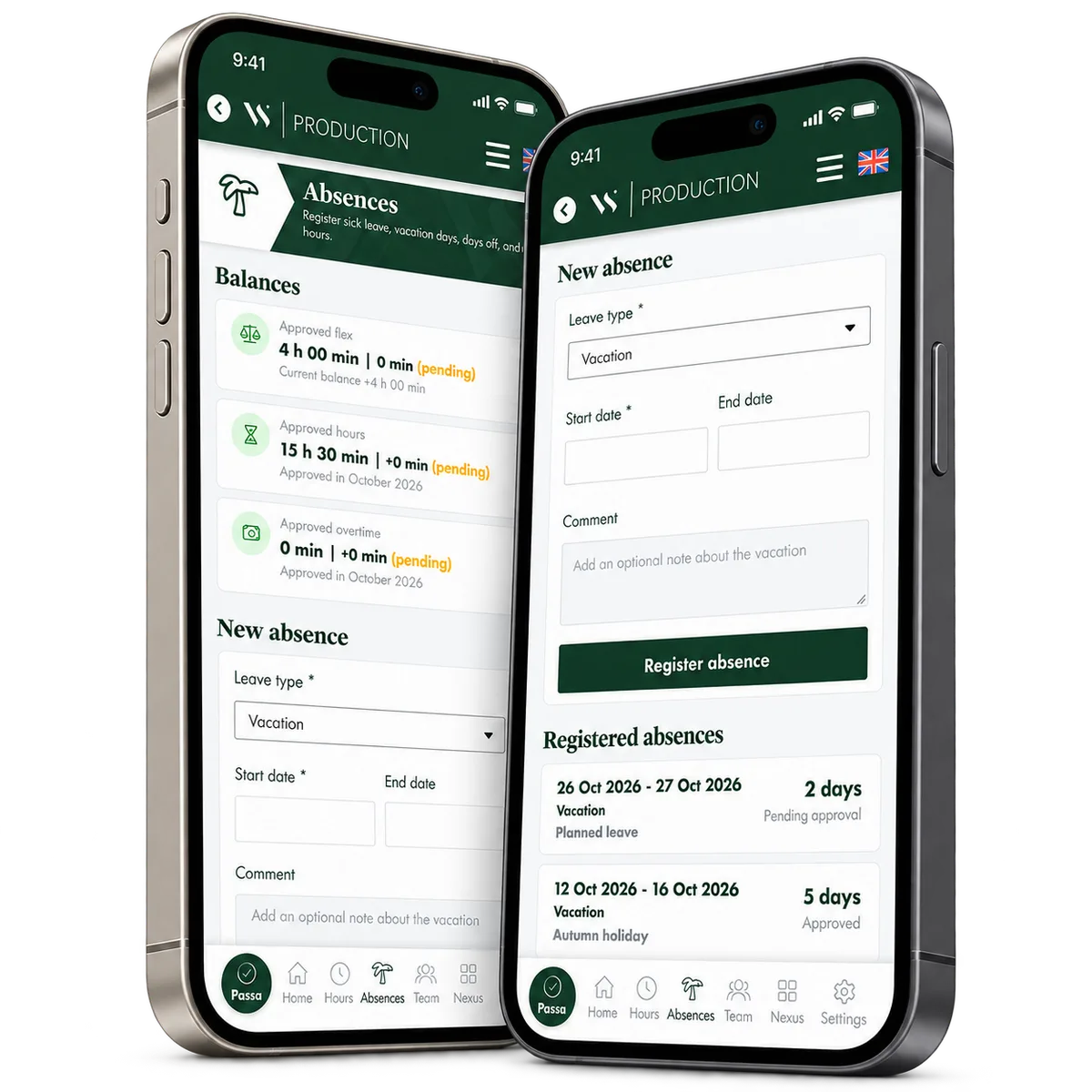
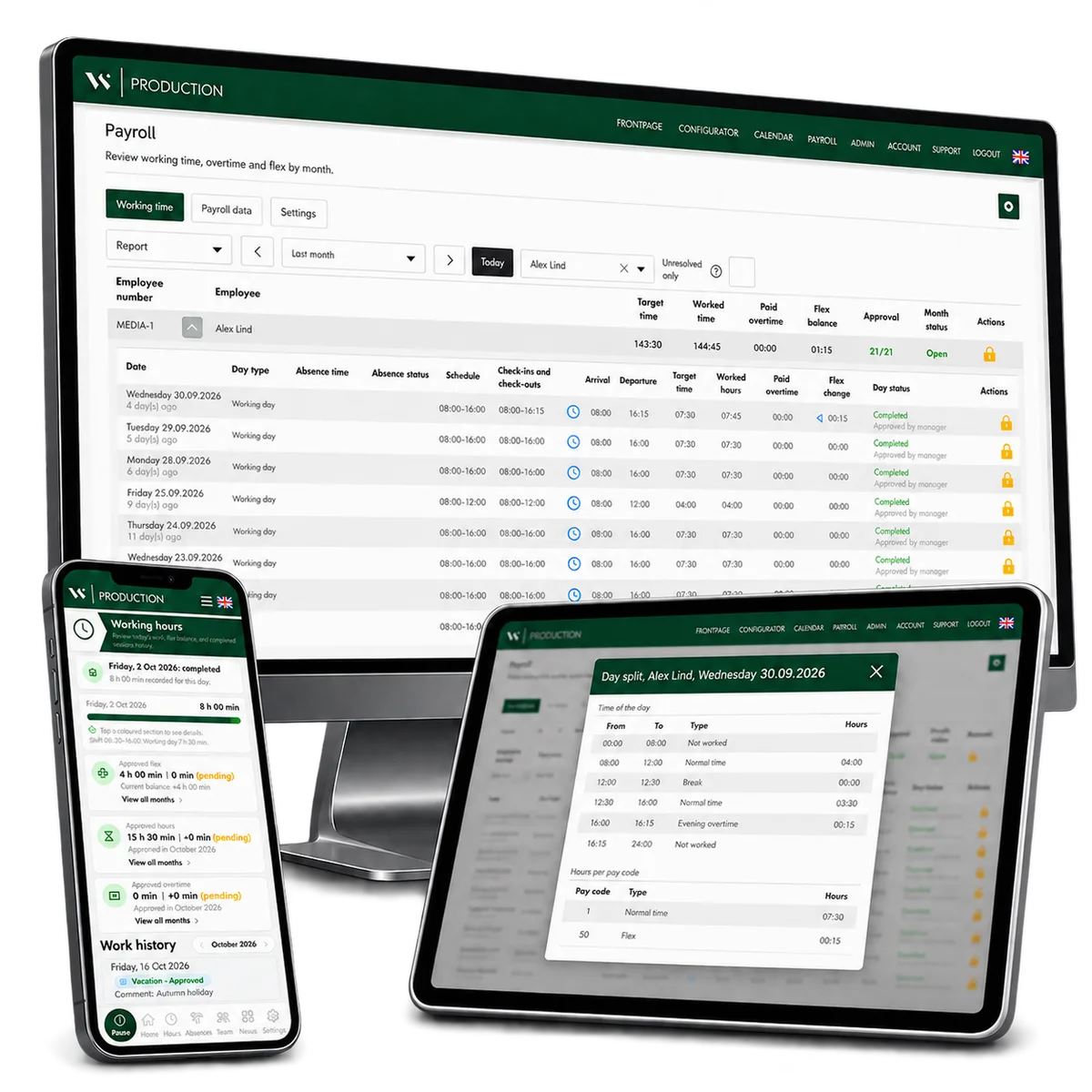
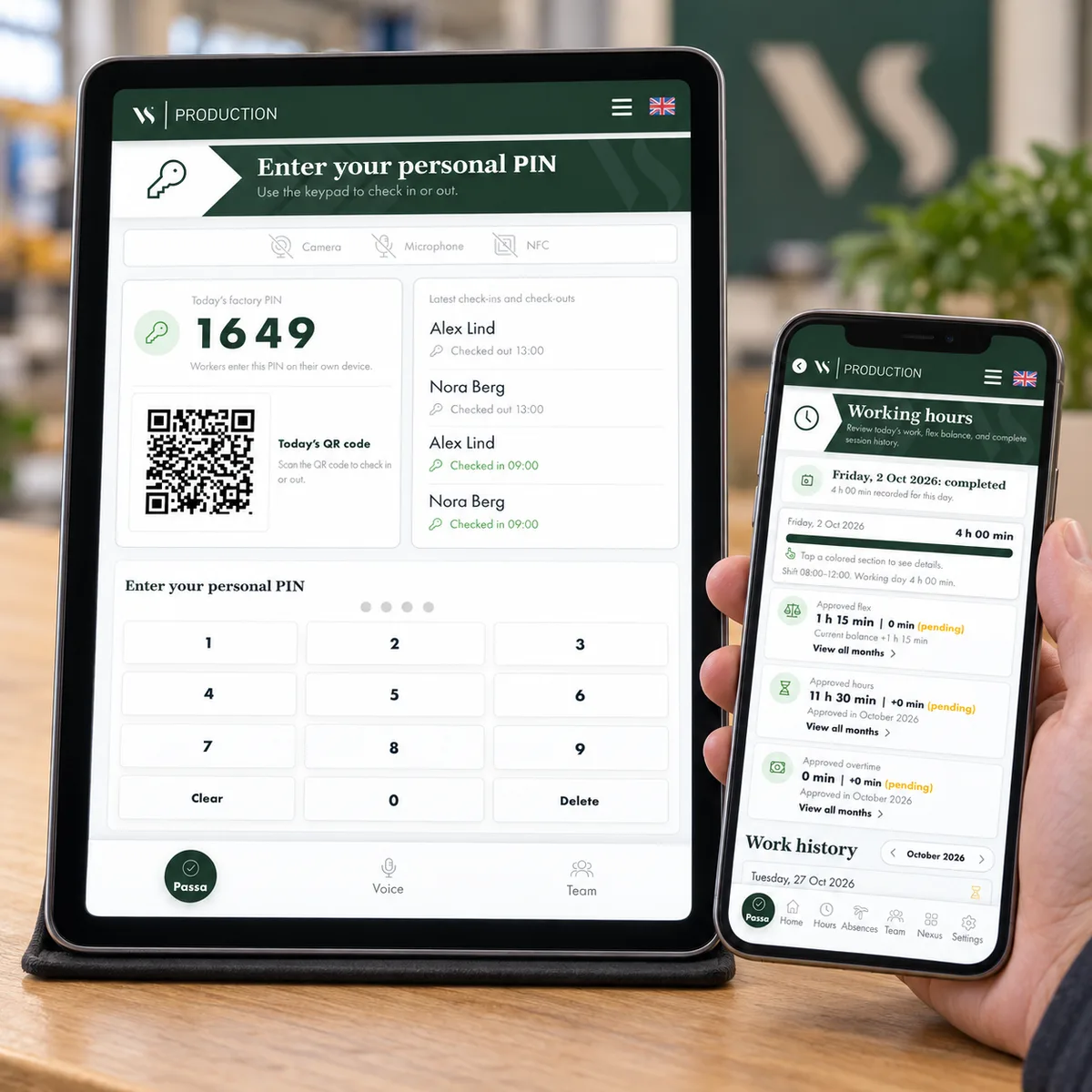
Passa supports PIN, QR and location-based attendance, working-hour views and absence requests. Managers review and approve, with approved absences shown in the calendar.
Reusable platform model
Live use and rollout
production deployment
VS Nexus manufacturing operations platform
VS Nexus is in active production and under continued development for VS Production. A September 2026 data snapshot connects more than 16,000 stored orders — including imported order history dating back to 2018 — with over 39,000 linked production and invoice documents, showing how much existing operational information the platform now keeps connected, not the age of the VS Nexus deployment itself.
Reusable platform model
What ReApptor can reuse from this case
Manufacturing knowledge attached to the item
Materials and requirements are connected to the manufacturing route and operations for that specific order line, not treated as a generic checklist.
- The workshop always works from the route that matches the actual material and treatment, not from memory or paper instructions.
Ideal for
Made-to-order manufacturers where different materials or treatments each need their own production route.
Production plans with business context
Planned production work is shown alongside its department, customer and order, so a team member can move from the calendar straight to the job behind it.
- A schedule conversation can start with the order and its requirements instead of a disconnected list of tasks.
Ideal for
Production planners and supervisors who regularly need to explain today's work or a changed delivery deadline to colleagues.
Documents that remain part of the work
Order files, scanned production documents and invoice PDFs stay connected to their order instead of living in separate folders or email inboxes.
- Existing working documents keep their value inside the connected system instead of being abandoned during digitalisation.
Ideal for
Manufacturers with an existing paper or Excel-based order history who still need that material during production and follow-up.
A continuous commercial journey
Manufactured items connect to their packages, shipments and either individual or consolidated invoice references, following the applicable customer and date rules.
- Shipping and finance teams can trace any delivery or invoice back to the exact orders and order lines that it covers.
Ideal for
Manufacturers who ship and invoice across multiple orders per customer and need those references to stay traceable.
People within the production process
Employees record working time and request absences, and managers review and approve them in the same environment as production planning.
- Working-time and absence management sit next to production planning instead of in a separate, disconnected tool.
Ideal for
Manufacturing teams that want workforce time-tracking connected to the same system as their production work.
Configurable catalog for made-to-order items
The product catalog models groups, variants and images, with options such as material, size, text, logo or Braille that adapt to what a specific product allows.
- A new made-to-order product line can reuse the same option-driven catalog instead of building custom configuration screens from scratch.
Ideal for
Businesses selling configurable or personalised products where the available options depend on what was already chosen.
Screenshots and media
Screenshots and media
Client feedback
It has now been approximately five months since we decided to work together and began our digital transformation journey at VS Production. During this time, you have confirmed that we made the right decision by choosing you as our partner. Following the successful first implementation of the invoicing solution, I am truly looking forward to the next phase of implementations this autumn.
With ReApptor Oy, we've found our digital business partner.Verified review on Clutch
Connect the work behind your customer orders.
Tell us how an order moves through your business. ReApptor can connect customer requirements, workshop planning, documents, shipping and accounting while retaining the tools and manufacturing knowledge your team depends on. Start with one real order and the people who carry it through.
Discuss your manufacturing system